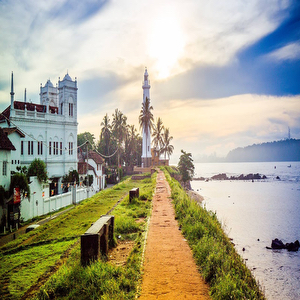
Historical UNESCO Site – This is a historic fortified city located on the southwestern coast of Sri Lanka. Originally built by the Portuguese in the 16th century and extensively fortified by the Dutch in the 17th century, it stands as a remarkable example of European architecture and South Asian traditions.
Why people come here
Cultural Exploration – Visitors are drawn to the Fort for its rich history, unique blend of European and South Asian architectural styles, and vibrant atmosphere. It's a place for leisurely strolls, exploring museums, art galleries, and boutique shops, and enjoying the scenic coastal views.
What to expect
Charming Atmosphere – Expect a charming, pedestrian-friendly environment within the fort walls. The streets are lined with beautifully preserved colonial buildings, many of which now house cafes, shops, and guesthouses. It's generally a relaxed pace, suitable for those who enjoy history, culture, and a bit of exploration on foot. The crowd can vary, with more visitors during peak tourist seasons.
Historical background
Colonial Heritage – The Fort's origins trace back to 1588 when the Portuguese established a fort here. The Dutch then captured it in 1640 and significantly expanded and fortified it, giving it much of its current appearance. Later, the British took control in 1796. It was declared a UNESCO World Heritage Site in 1988, recognizing its outstanding universal value as a unique example of a fortified city.
Key highlights
Ramparts and Walls – Walking along the ancient ramparts offers panoramic views of the ocean and the fort's interior. Don't miss the Galle Lighthouse and the various bastions.
Dutch Reformed Church – A significant historical landmark within the fort, known for its beautiful architecture and historic gravestones.
National Museum of Galle – Housed in one of the oldest Dutch buildings, it showcases archaeological and anthropological artifacts.
Maritime Archaeology Museum – Displays artifacts recovered from shipwrecks around the Galle coast.
Best time to go
Dry Season – The best time to visit is generally during the dry season, from December to March, when the weather is pleasant for exploring. Mornings and late afternoons are ideal for walking the ramparts to avoid the midday heat.
How much time to spend
Half to Full Day – I recommend allocating at least half a day to a full day to properly explore the Fort, depending on your interest in museums and shopping. You could easily spend more time if you enjoy lingering in cafes or exploring every lane.
Practical info
Walking is Key – The Fort is best explored on foot. Wear comfortable shoes as you'll be walking on cobblestone streets and uneven surfaces. There are many cafes and restaurants within the fort for refreshments. Restrooms are available in various establishments.