
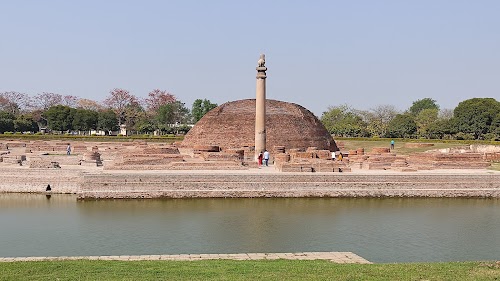



Ashokan Pillar, Kolhua, Bihar, India
What is this place?
Ancient Monument – I see this as an ancient monolithic pillar, a significant relic from the Mauryan Empire in Kolhua . It stands as a testament to Emperor Ashoka's reign and his propagation of Buddhism.Why people come here
Historical Insight – People typically visit to witness a piece of ancient Indian history and to understand the legacy of Emperor Ashoka. It's a place for reflection on the past and its cultural impact.Historical background
Mauryan Era – This pillar dates back to the 3rd century BCE, erected during the reign of Emperor Ashoka. It is one of several such pillars he commissioned across his empire to spread the message of Dhamma (righteousness). The pillar at Kolhua is particularly notable for its well-preserved lion capital.Key highlights
Lion Capital, Inscriptions – The primary highlight is the polished sandstone pillar itself, topped by a magnificent lion capital facing north, believed to be towards Vaishali . While the pillar once bore Ashokan edicts, they are now largely faded or lost, adding to its mystique. The site also includes the remains of a brick stupa and a monastery.Best time to visit
Cooler Months – The most comfortable time to visit is generally during the cooler months, from October to March. The weather is more pleasant for exploring the outdoor site.How much time to spend
1-2 Hours – I would say you'll typically need about 1 to 2 hours to explore the Ashokan Pillar and its immediate surroundings thoroughly, allowing time for appreciation and photography.Practical info
Open Air Site – This is an open-air historical site. There are generally no specific entry fees mentioned for accessing the pillar itself, but local guidance might be helpful. It's advisable to wear comfortable shoes as you'll be walking on uneven ground.Good to know
Buddhist Significance – The Ashokan Pillar at Kolhua is located near ancient Vaishali , a place of immense significance in Buddhism as it was frequently visited by Lord Buddha. This proximity underscores the pillar's role in the early spread of Buddhism.