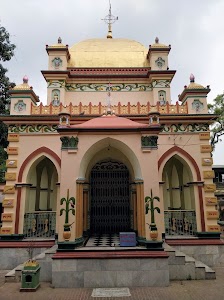
Hindu Temple – I find this to be a revered Hindu temple located in Nabadwip, a town deeply significant in Vaishnava traditions. It serves as a spiritual center for devotees, particularly those following the Gaudiya Vaishnavism path.
Why people come here
Devotion & Peace – People typically visit this mandir for spiritual solace, to offer prayers, and to participate in devotional activities. It's a place for quiet contemplation and experiencing the rich religious heritage of Nabadwip.
Spiritual or cultural significance
Vaishnava Heritage – Nabadwip is the birthplace of Chaitanya Mahaprabhu , a 15th-century saint and social reformer who popularized the congregational chanting of the Hare Krishna mantra. This temple, with "Anumahaprabhu" in its name and its location in "Manipur Rajbari," likely holds a special connection to this spiritual lineage or a historical association with the former royal family of Manipur, who were also devotees.
What to expect
Serene Atmosphere – You can expect a peaceful and devotional atmosphere, often filled with the sounds of kirtan (devotional singing) or quiet prayers. The temple typically features traditional architecture and deities central to Vaishnava worship.
Visitor etiquette
Respectful Conduct – When visiting, I recommend dressing modestly, covering your shoulders and knees. It is customary to remove your shoes before entering the main shrine area. Maintaining a respectful silence or speaking softly is also appreciated to preserve the sanctity of the place.
Practical info
Temple Hours – Temples generally have specific opening and closing hours, often with a midday break. While exact timings can vary, you can typically expect morning and evening darshan (viewing of the deities). A visit here usually takes a short duration, perhaps 30 minutes to an hour, depending on your level of engagement.
Good to know
Nabadwip's Essence – This mandir embodies a part of Nabadwip's profound spiritual landscape. Its connection to "Manipur Rajbari" suggests a unique historical and cultural blend, possibly reflecting a legacy of royal patronage for Vaishnava traditions in the region.