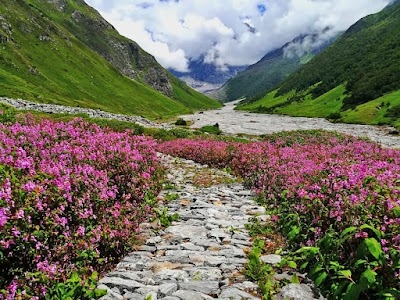
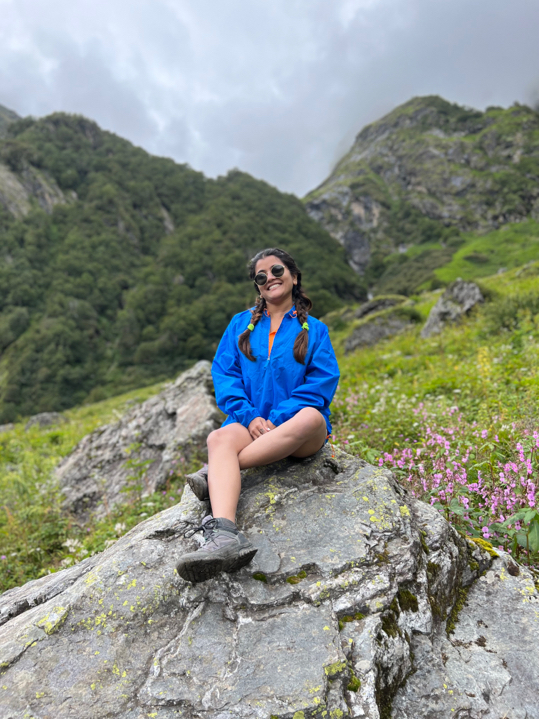
High-altitude sanctuary – I know this place as a breathtaking high-altitude Himalayan valley, nestled in the Chamoli district of Uttarakhand, India. It's a UNESCO World Heritage Site, celebrated for its vibrant meadows of endemic alpine flowers and diverse flora. It's truly a natural botanical garden at an elevation of over 3,600 meters.
Why people come here
Nature's spectacle – People journey here primarily to witness the spectacular bloom of thousands of flower species, creating a vibrant carpet across the valley floor. It’s a paradise for nature lovers, botanists, photographers, and trekkers seeking unparalleled natural beauty and a peaceful escape into the Himalayas. Many also visit as part of a pilgrimage to the nearby Sikh holy site of Hemkund Sahib.
What to expect
Floral wonderland, challenging trek – Here, you can expect an immersive experience in a pristine natural environment. The atmosphere is serene and awe-inspiring, dominated by the fragrant air and the visual feast of countless flowers against a backdrop of majestic peaks. The journey involves a moderate to challenging trek, so be prepared for physical exertion and varying weather conditions. Crowd levels are typically moderate during peak season, as access is regulated.
Best time to go
Monsoon bloom – The ideal time to visit is generally from **July to August**, during the monsoon season. This is when the valley is at its full bloom, showcasing the maximum variety and density of flowers. Early September can also be beautiful, with a different set of flowers in bloom, though the intensity might start to wane.
Practical info
Permits, trek, base camp – Access to the Valley of Flowers National Park requires a permit, which is typically obtained at the entry gate. The valley itself is a protected area, and overnight stays are not permitted inside. Visitors usually base themselves at the village of Ghangaria , which is the last human settlement before the valley and offers basic accommodation and food. The trek to the valley from Ghangaria is around 3-4 km one way. The path is well-defined but can be steep and rocky in places. Good physical fitness is essential, and sturdy trekking shoes are a must. Be prepared for sudden weather changes, including rain and cooler temperatures.
Good to know
Rich biodiversity, legends – This valley is home to over 500 species of flowering plants, many of which are medicinal. It's also believed to be the place from where Hanuman collected the Sanjeevani Buti to revive Lakshman in the Hindu epic Ramayana. The park is part of the larger Nanda Devi Biosphere Reserve, contributing to its rich biodiversity and ecological significance. Keep an eye out for rare wildlife, including Asiatic black bears, snow leopards, musk deer, and various bird species.