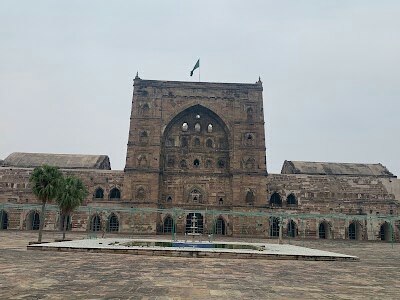
Grand Mosque – I see Badi Masjid, also known as Jama Masjid, as a magnificent historical mosque located in Syed Ali Pur, Jaunpur . It stands as a prominent landmark and an active place of worship in the region.
Spiritual or cultural significance
Religious Hub – This mosque holds deep spiritual importance for the local Muslim community as a central place for daily prayers and congregational gatherings. Culturally, it is a significant relic of the Sharqi dynasty's architectural and artistic prowess, reflecting a rich historical period.
Historical background
Sharqi Legacy – The construction of Badi Masjid began in 1438 AD under Sultan Mahmud Shah Sharqi and was later completed by Sultan Hussain Shah Sharqi in 1470 AD. It is a prime example of the distinctive Sharqi style of architecture that flourished in Jaunpur during that era.
Key highlights
Architectural Marvel – As you explore, you'll notice its impressive scale, featuring a vast courtyard and a striking propylon (gateway) that leads into the main prayer hall. The mosque's unique minarets and intricate stone carvings are testament to its historical craftsmanship.
What to expect
Peaceful Grandeur – I find that visitors can expect a sense of calm and grandeur within its expansive premises. The atmosphere is generally serene, offering a quiet space for reflection, though it can become quite vibrant during prayer times or religious festivals.
Visitor etiquette
Respectful Visit – When visiting, I recommend dressing modestly, covering shoulders and knees, as a sign of respect for its religious sanctity. It is customary to remove your shoes before entering the main prayer areas. Maintaining a quiet demeanor is also appreciated.
Practical info
General Guidance – The mosque is typically open from dawn till dusk. While it is a historical site, its primary function is a place of worship. Accessibility may vary, and some areas might involve steps, typical of ancient structures.
Good to know
Unique Style – Badi Masjid is renowned for its distinctive Sharqi architectural style, which sets it apart from other Indian mosques. This unique blend of indigenous and Islamic architectural elements makes it a fascinating study for history and architecture enthusiasts.