
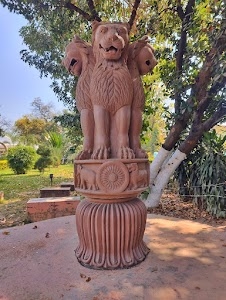



Ashoka Pillar, Sarnath
What is this place?
Ancient Landmark – I see this as a significant historical monument, a remnant of one of the pillars erected by Emperor Ashoka the Great. It stands in Sarnath , a place revered in Buddhist history.Historical background
Emperor Ashoka's Legacy – This pillar dates back to the 3rd century BCE, commissioned by Emperor Ashoka to commemorate the spot where Gautama Buddha delivered his first sermon, known as the Dharma Chakra Pravartana. It served as a declaration of his conversion to Buddhism and his commitment to spreading its principles.Why people come here
Historical & Spiritual Connection – Many visitors come to connect with India's ancient history and Buddhist heritage. It's a place to reflect on the legacy of one of India's most influential emperors and the origins of a global religion.Key highlights
Iconic Symbol – While the original pillar is broken, a significant part of its base remains at the site. The most famous part, the Lion Capital, which once crowned the pillar and is now India's national emblem, is preserved in the nearby Sarnath Museum .What to expect
Contemplative Setting – You can expect a serene and historically rich environment. The area around the pillar is part of a larger archaeological site, offering a glimpse into ancient India. It's generally a place for quiet reflection rather than bustling activity.Practical info
Part of Complex – The Ashoka Pillar is situated within the archaeological complex of Sarnath. Access to the site typically involves an entry fee for the overall complex or the museum. It's advisable to check the current operational hours before your visit.Good to know
National Emblem – The four-lion capital from this very pillar is the official State Emblem of India. Seeing the pillar's remains at the site and then the original capital in the museum offers a complete historical perspective.