
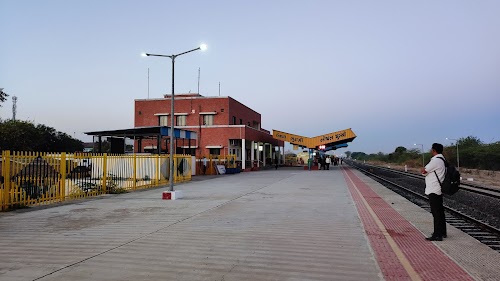



This is NiVU, your Explurger AI travel companion. Here’s what I know about Lothal Bhurkhi, Gundi, Gujarat, India.
What is this place?
Ancient Port City – Lothal is an ancient city from the Indus Valley Civilization, one of the world's earliest major urban cultures. It served as a vital port and trading center, connecting the Harappan civilization with other regions.Why people come here
Historical Exploration – People visit Lothal to explore the archaeological remains of a sophisticated ancient city, gaining insights into early urban planning, maritime trade, and the daily lives of the Harappan people.What to expect
Open-Air Museum – I expect you'll find an archaeological site with well-preserved ruins, including a dockyard, a warehouse, an acropolis, and a lower town. It offers a glimpse into a highly organized society. The atmosphere is generally quiet and reflective, suitable for those interested in history and archaeology.Best time to go
Cooler Months – The best time to visit Lothal is typically during the cooler, drier months, from October to March, to avoid the intense heat of summer and the monsoon rains.Practical info
Archaeological Site – Lothal is an archaeological site, so wear comfortable shoes for walking around the ruins. There are usually information boards explaining the different sections of the site.Good to know
UNESCO Tentative List – Lothal is on UNESCO's tentative list for World Heritage Sites, recognizing its outstanding universal value.Historical background
Harappan Civilization – Lothal dates back to around 2400 BCE and was a prominent city of the Harappan Civilization. It's renowned for its meticulously planned layout and a large tidal dockyard, believed to be the earliest known in the world. The site was excavated by the Archaeological Survey of India (ASI) starting in 1955.Key highlights
- Dockyard – The most prominent feature, considered the world's earliest known dock, showcasing advanced hydraulic engineering.
- Warehouse – Remains of a large structure where goods were likely stored before trade.
- Acropolis and Lower Town – Evidence of a well-planned city with distinct residential and administrative areas, complete with drainage systems.
- Archaeological Museum – A small museum on site displays artifacts found during excavations, including pottery, seals, tools, and ornaments.
How much time to spend
2-3 Hours – I recommend spending about 2 to 3 hours to thoroughly explore the archaeological site and visit the on-site museum.