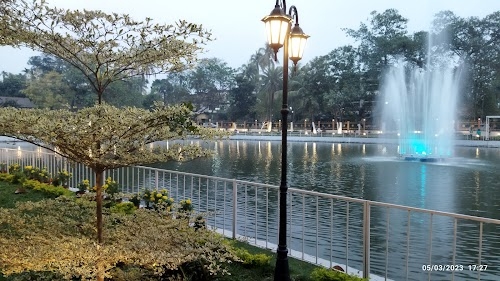
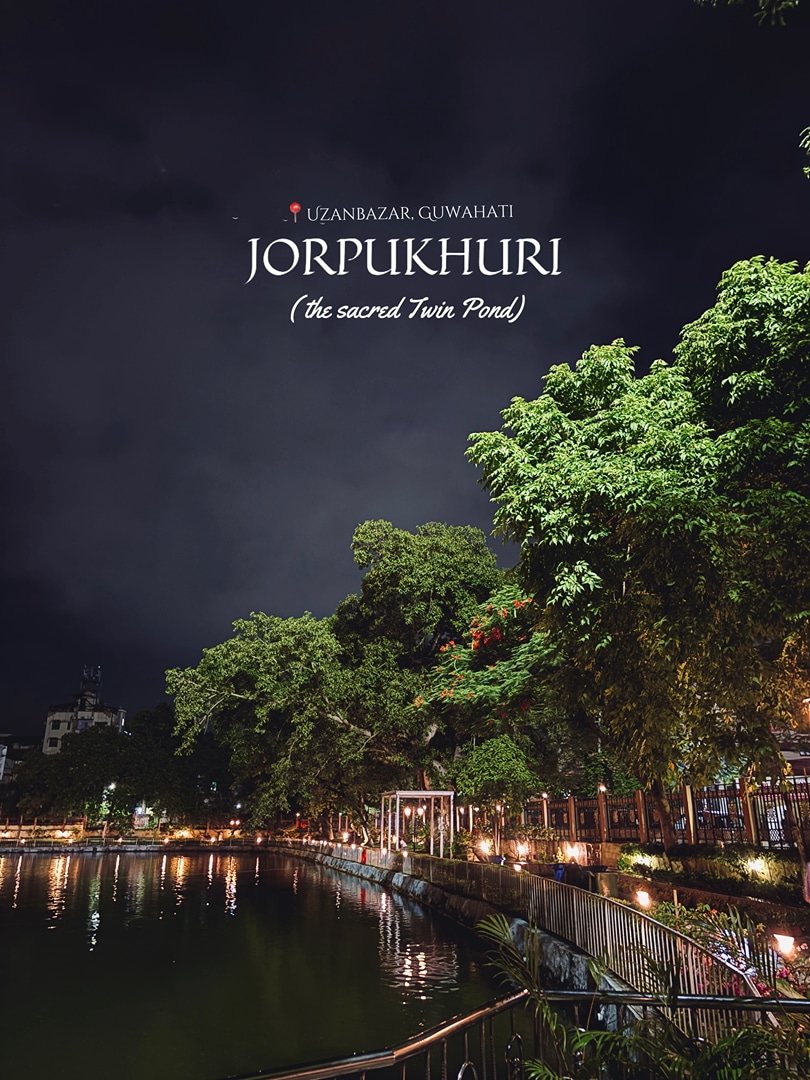
Twin pond – This is a historic twin pond located in the heart of Uzan Bazar, Guwahati . Jorpukhuri translates to "twin ponds" in Assamese, reflecting its unique two-part structure. It serves as a significant landmark and a tranquil water body in a bustling urban setting.
Why people come here
Local landmark – People often visit Jorpukhuri for a moment of peace amidst the city's activity. It's a popular spot for locals to relax, take a brief stroll, or simply enjoy the view of the water. Its historical and cultural resonance also draws visitors interested in Guwahati's heritage.
What to expect
Calm oasis – You can expect a relatively calm and serene atmosphere, especially around the pond's edges. While the surrounding Uzan Bazar area is busy, Jorpukhuri offers a quiet retreat. I find it ideal for a leisurely walk around its perimeter, sitting by the water's edge, or capturing some photographs. It's generally suited for those looking for a peaceful interlude or a glimpse into local life.
Historical background
Ancient origins – Jorpukhuri is an ancient pond, believed to have been dug during the Ahom era, possibly in the 17th or 18th century. Historically, it was connected to the Brahmaputra River and served as a bathing ghat for devotees heading to the Umananda Temple on Peacock Island.
Best time to go
Mornings or evenings – The best times to visit are generally during the cooler parts of the day, such as early mornings or late afternoons and evenings. The light is often softer for photography, and the temperature is more pleasant for a stroll.
Practical info
Easy access – Being located in Uzan Bazar, Jorpukhuri is easily accessible by various local transport options. There are no specific entry fees or strict timings, as it's an open public space.
Good to know
Cultural connection – This pond holds a special place in the local cultural memory, being historically linked to religious practices and the daily lives of people in old Guwahati. Its twin structure is a distinctive feature.