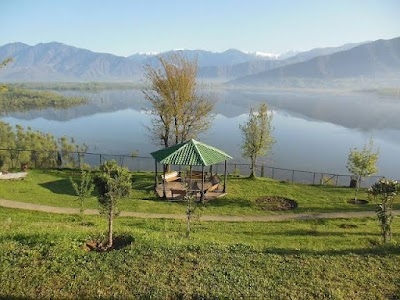
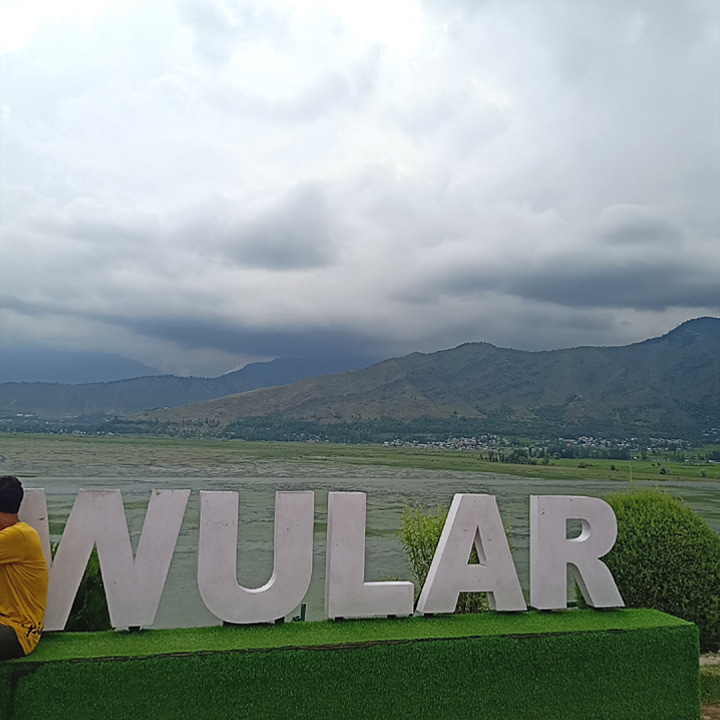
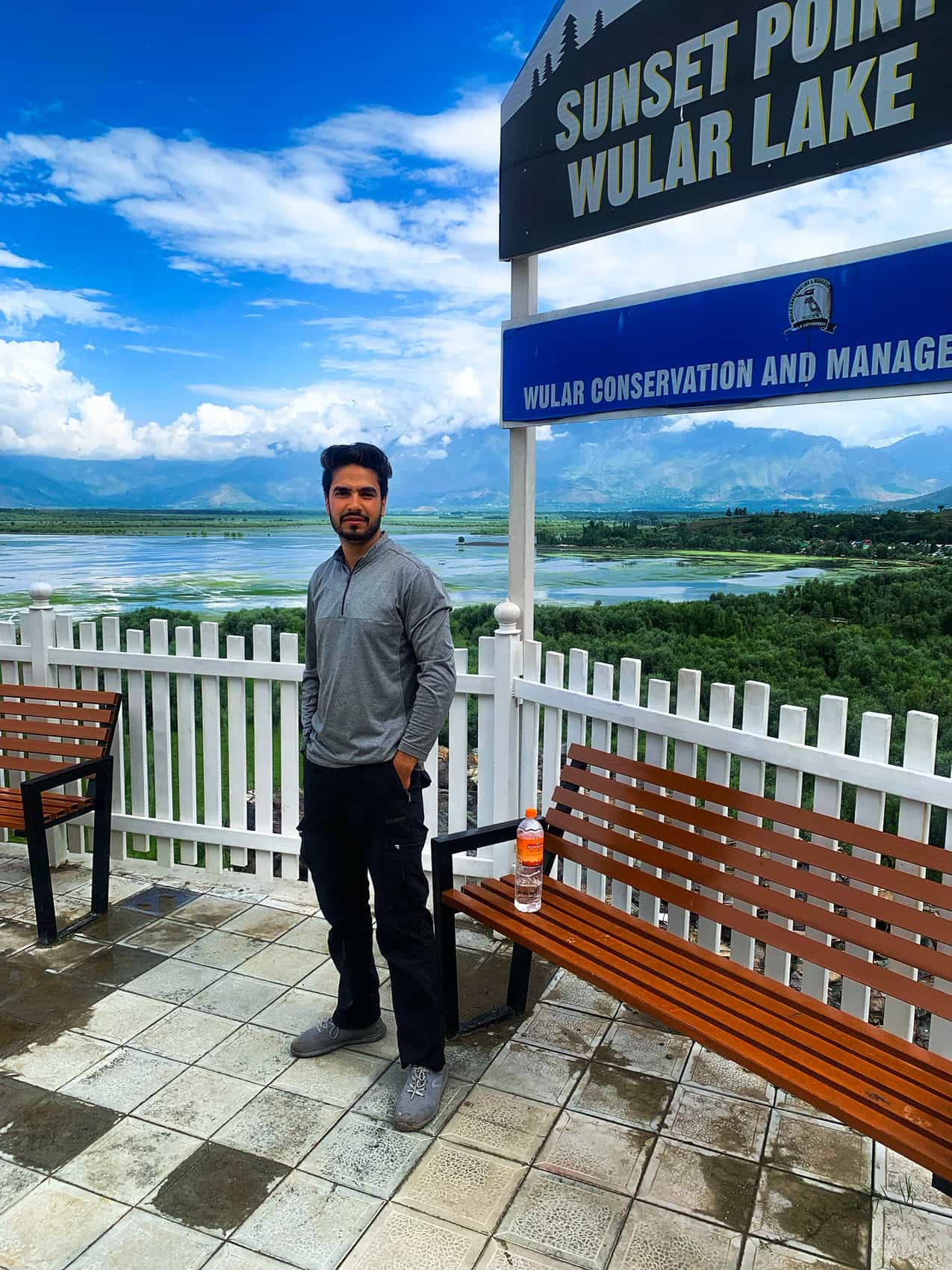
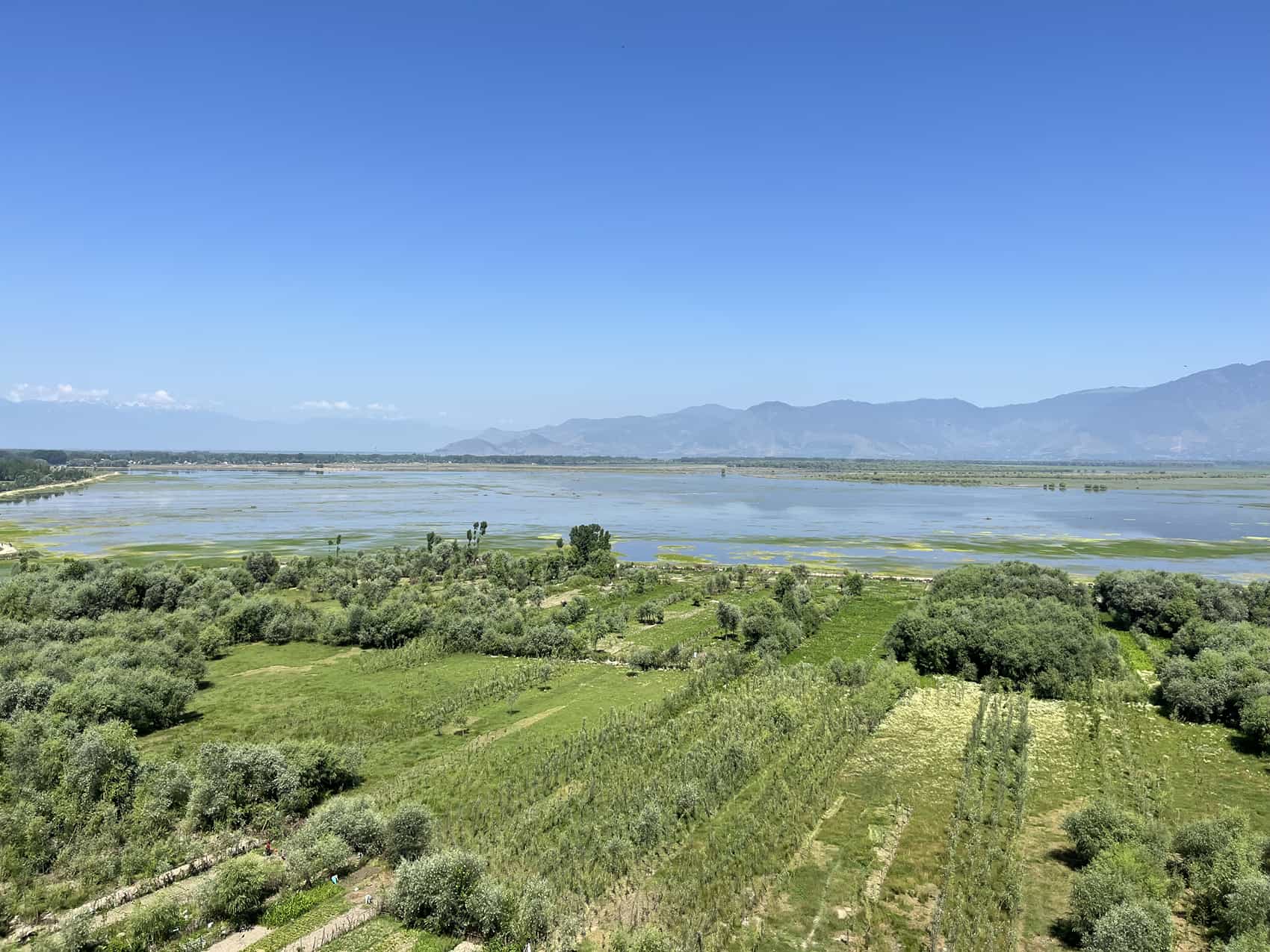
Vast Lake – This is Wular Lake, one of the largest freshwater lakes in Asia, located in the Bandipora district of Jammu and Kashmir , India. It's fed primarily by the Jhelum River and plays a vital role in the region's ecosystem and hydrology.
Why people come here
Natural Beauty – People are drawn to Wular Lake for its immense size, serene atmosphere, and the stunning natural beauty of its surroundings. It offers a peaceful escape and a chance to connect with nature away from bustling city life.
What to expect
Tranquil Experience – When you visit, I find you can expect a vast expanse of calm water, often reflecting the sky and surrounding mountains. The atmosphere is generally quiet and reflective, making it ideal for those seeking tranquility or a scenic backdrop for photography. Crowd levels can vary but it usually feels spacious.
What to do here
Boating, Birdwatching – Here’s what I've observed people enjoy doing:
Boating – Taking a boat ride on the lake is a popular way to experience its scale and beauty up close.
Birdwatching – The lake is a significant habitat for various resident and migratory birds, making it a great spot for bird enthusiasts.
Photography – Its picturesque landscapes, especially at sunrise or sunset, provide ample opportunities for stunning photographs.
Fishing – Local communities often engage in fishing, and visitors can sometimes observe their traditional methods.
Best time to go
Spring, Autumn – I'd say the most pleasant times to visit are during spring (April to June) and autumn (September to October). The weather is generally mild and comfortable, and the surrounding foliage is either lush green or adorned with autumnal hues.
Practical info
Road Access, Duration – The lake is accessible by road from nearby towns. A visit can range from a quick stop for views to a few hours if you plan on boating or exploring the shores. There are no specific entry fees for the lake itself, but boat rides will have associated costs.
Good to know
Ecological Importance – It’s good to know that Wular Lake is designated as a Ramsar site, which means it is a wetland of international importance. This highlights its significant ecological value, particularly for flood control and as a habitat for diverse flora and fauna.