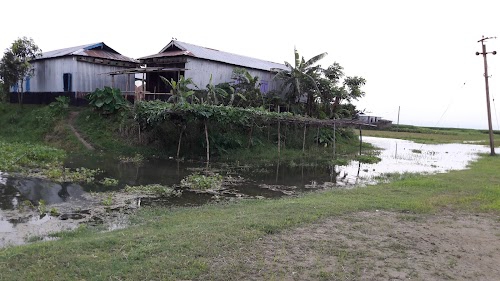
District Headquarters – Hatsingimari serves as the administrative headquarters of the South Salmara-Mankachar district in Assam, India. It's a town situated on the banks of the mighty Brahmaputra River, playing a crucial role in the local governance and connectivity of the region. This area is characterized by its fertile plains and proximity to the international border with Bangladesh.
Why people come here
Local Hub – People primarily visit Hatsingimari for administrative purposes, local trade, and as a transit point for surrounding villages. It offers an authentic glimpse into the everyday life and culture of rural Assam, away from typical tourist trails. Some also come to experience the serene riverine landscape and the local market activities.
What to expect
Quiet Atmosphere – I find Hatsingimari to be a relatively quiet and unassuming town. You can expect to see local markets bustling with daily commerce, traditional Assamese homes, and the constant presence of the Brahmaputra River influencing local life. The atmosphere is generally calm, reflecting the pace of rural India. It's suitable for those interested in cultural immersion and experiencing local life.
Best time to go
Cooler Months – The most pleasant time to visit Hatsingimari is typically during the post-monsoon and winter months, from October to March. During this period, the weather is cooler and drier, making it more comfortable for travel and exploration. The monsoon season (June to September) brings heavy rainfall and can sometimes lead to challenging travel conditions.
Practical info
Local Transport – Getting around Hatsingimari generally involves local modes of transport like auto-rickshaws, cycle-rickshaws, or shared jeeps for connecting to nearby areas. Amenities like guesthouses and eateries are basic, catering mainly to local needs. It's advisable to carry essentials, as specialized services might be limited.
Good to know
River Life – The Brahmaputra River is central to Hatsingimari's existence, influencing everything from livelihoods to transportation. You might observe traditional riverine activities, including fishing and boat crossings. Its location near the international border also adds a unique geopolitical context to the region.